The rumor mill and early hands-on impressions for Samsung’s Galaxy S26 lineup are painting a fascinating picture this year. Between shifting storage tiers, unexpected price tweaks, and a stubborn commitment to the compact form factor, there is a lot to unpack. The standard Galaxy S26 still has plenty of fight left in it, but a closer look at the pricing strategy suggests the premium Ultra model might actually be the real volume driver.
Storage Bumps and the Price of Admission
For a while now, 128GB has been the default starting point for Samsung’s standard S-series devices. That era is apparently over. Recent leaks from a Finnish retailer indicate the base Galaxy S26 will kick things off at 256GB. It is a familiar playbook; Apple pulled the exact same move last year when it axed the 128GB tier for the base iPhone 17 and made 256GB the new floor alongside higher-capacity options.
Extra storage is always welcome, but the associated price hike is a tougher pill to swallow. According to reliable leaker Roland Quandt, the 256GB standard S26 will hit Sweden at 11,990 SEK. Do the math on the direct conversion, and you are looking at roughly $1,358. For context, the equivalent Galaxy S25 launched there at 10,990 SEK (around $1,245). That $113 difference strongly implies the entry-level S26 will see a price bump of about $100 in the US. Taking into account regional taxes like VAT, the base S26 is expected to land somewhere between $900 and $960.
Why the Ultra Could Dominate
While the vanilla model gets pricier, the Ultra is trending in the opposite direction. Quandt’s report points to the 256GB and 512GB S26 Ultra models costing 16,990 SEK and 18,990 SEK, respectively. Compared to the S25 Ultra, that is a drop of 1,000 SEK (about $113) for the base model and 500 SEK ($56.50) for the 512GB version.
A roughly $1,200 starting price for the Ultra makes it highly competitive. Throw in heavily rumored upgrades like a new privacy display, and these slight price cuts could easily convince buyers to upsell themselves to the top-tier flagship. Meanwhile, the notoriously slow-selling Plus variant isn’t getting any favors. The 256GB S26 Plus holds its price, but the 512GB model is jumping up by about $113. Frankly, missing the chance to drop the price on the struggling Plus model feels like a misstep from the Korean tech giant.
Living with the Vanilla S26
Pricing aside, the hardware itself tells a story of minor refinements rather than sweeping revolutions. Having spent some time testing the “no-surname” standard Galaxy S26, I can safely say it leaves a remarkably sweet taste, even if the evolution from last year is admittedly scarce.
We all know the compact smartphone is on life support, usually killed off by inadequate batteries and screens too small for today’s media consumption. Yet, the 6.3-inch S26 makes a compelling case for keeping the dream alive. At just under 15 cm tall, 7.17 cm wide, and weighing a mere 167 grams, the ergonomics are fantastic. It is genuinely comfortable to hold and easily manageable with one hand.
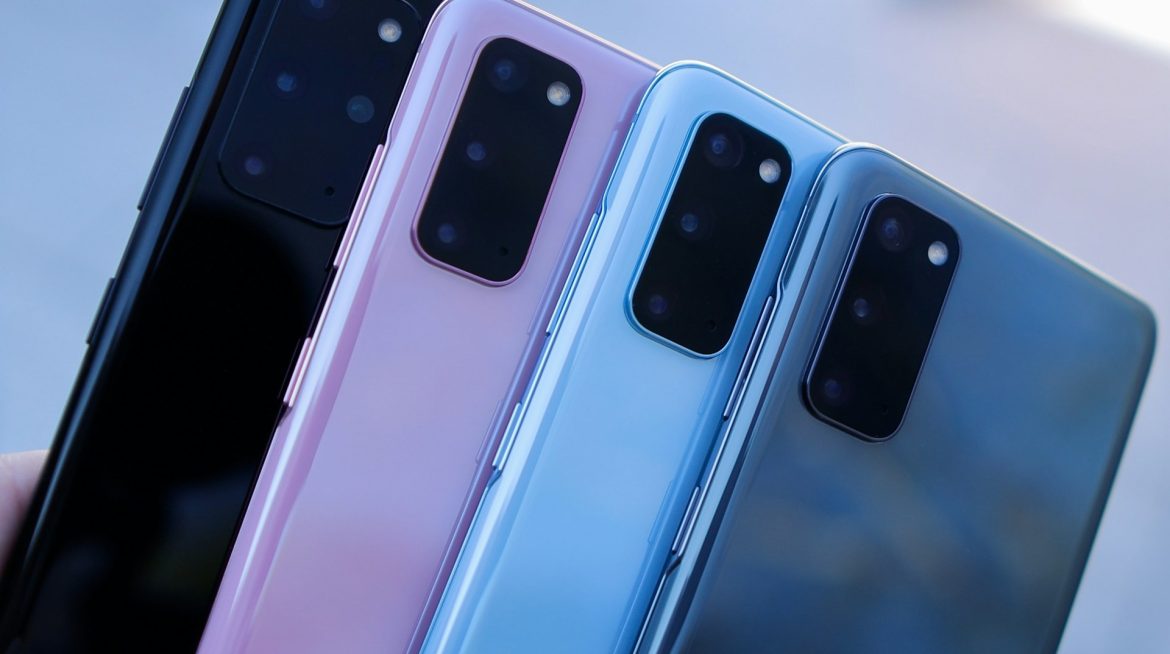
Our violet review unit features an aluminum frame that screams premium build quality. Be warned, though: it is an absolute fingerprint magnet. No matter how clean your hands are, smudges build up quickly on the back glass. The device is also surprisingly slippery for its size, making a case a practical necessity. Physical controls remain right where Galaxy veterans expect them, with the volume rocker and power button easily accessible on the right edge. The bottom houses the dual Nano SIM tray, USB-C port, and a speaker.
Under the Hood
Samsung is returning to its own silicon for the smaller model, equipping the S26 with the Exynos 2600 processor. The phone runs One UI 8.5 on top of Android 16, keeping the software experience snappy and fully modernized.
Galaxy S26 Key Specs:
-
Dimensions & Weight: 14.96 x 7.17 x 0.72 cm; 167 grams
-
Display: 6.3-inch AMOLED 2X, FullHD+, 1–120Hz refresh rate, 2,600 nits peak brightness
-
Processor: Exynos 2600
-
Memory & Storage: 12GB RAM; 256GB / 512GB
-
Battery: 4,300 mAh (25W wired, wireless, and reverse wireless charging)
-
Cameras: 50MP main (f/1.8 OIS), 12MP ultrawide, 10MP telephoto; 12MP front
-
Connectivity: WiFi 7, 5G, Bluetooth 5.4, NFC, USB-C
-
Durability: IP68 water and dust resistance
Rounding out the experience are the biometrics. Samsung’s ultrasonic in-display fingerprint sensor is fast, reliable, and perfectly placed. I haven’t had a single misread during testing. The facial recognition, handled entirely by the front camera, also exceeded expectations. While not the most secure method available, it proved surprisingly capable even in dim lighting—a scenario where typical camera-based face unlock usually falls apart.